
A resin art toy is made in ten stages: idea, sketch, digital sculpt, scale test, master print, moulds, casting, sanding and priming, hand painting, and finishing with a numbered certificate. Each figure goes through every stage by hand. At Atom Toys Studios, an art toy studio in Espoo, Finland, one batch takes about 10 days from casting to finished figure.
This isn't a how-to for makers. It's a look at what goes into the piece on your shelf, step by step.
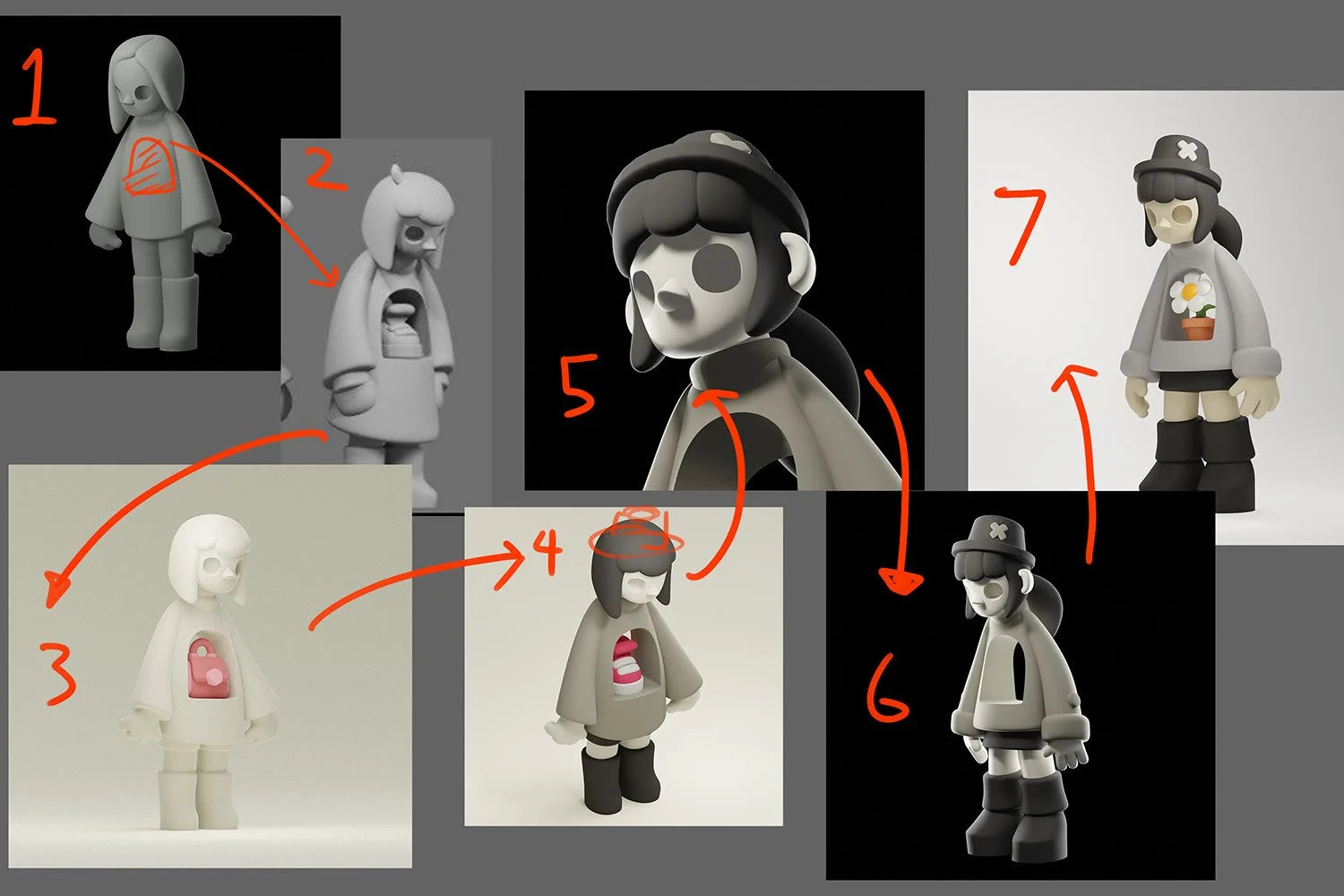
1. It starts with one sentence
Every figure begins as an idea, not a drawing. Before anything is sketched, the character has to work as a single sentence. Joy Boy started as a character who holds both joy and despair, using small joys to fill the void.
If the sentence is weak, the figure ends up as decoration. If it's strong, it becomes something people want to keep. For us, that idea always comes back to the void: the empty space in each character, with a small joy inside.
2. Sketching the character
The sketch is about feeling, not detail. The first drawings test the silhouette, the pose and the mood. Does the character read from across a room? Does the void show clearly? Is the feeling there before any detail is added?
3. Sculpting it digitally
The figure is sculpted on a computer in stages. First a rough blockout for proportion and pose. Then a check that the emotion still reads. Then the practical decisions: where the figure splits into parts, where the seams go, and how each part will be painted. Only then come the details.
The rule we follow: don't make the toy only for the render. Make it for the hand, the mould, the paint booth, the box and the shelf.
4. Testing the scale
A toy that looks right on screen can feel wrong in your hand. So we print fast, rough prototypes to test the size, the balance and how it stands.
We check things like:
Does it feel premium at this size?
Is the head too heavy?
Are the arms, feet or accessories too fragile?
Can you see the void clearly?
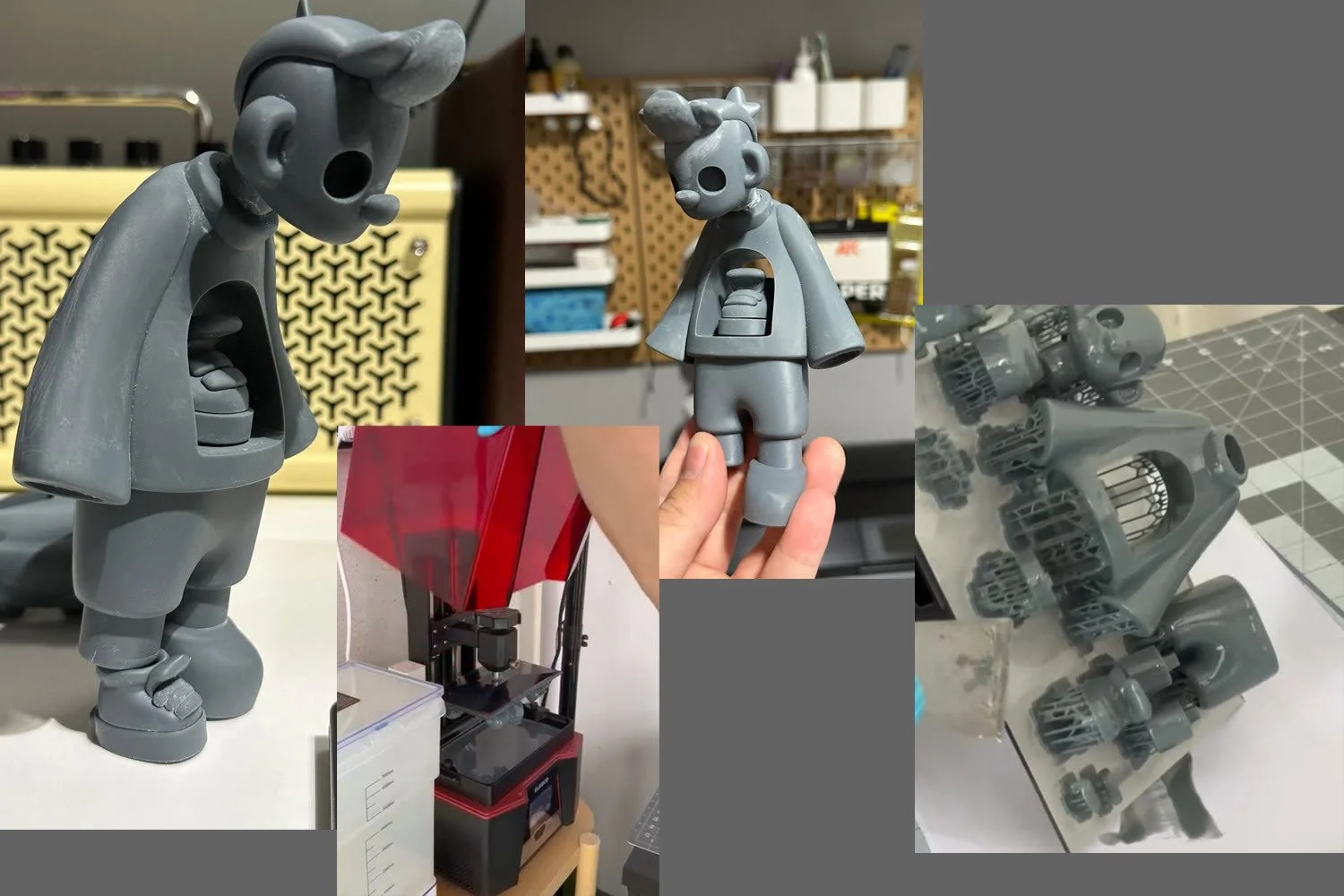
5. Printing the master
Once the form is solved, a high-detail resin master is printed. This is the original that every figure in the edition is cast from. It's sanded and cleaned until the surface is perfect, because any flaw in the master shows up in every copy.
6. Making the moulds
Silicone is poured around the master to make the moulds, usually one for each part. Planning matters here: how the mould is cut, where the resin goes in and where the air gets out. Silicone moulds wear out over time, so they're remade during the life of an edition.
7. Casting in resin
Each part is cast by hand. The resin is measured, mixed with pigment, poured into the mould and cured in a pressure pot to remove bubbles. Our fast resin gives about three minutes to work before it sets, so everything is prepared before mixing.
Not every cast is perfect. Parts with bubbles or short casts are thrown away and cast again.
8. Sanding and priming
This is where most of the hours go. Every part has seams and joints that are sanded smooth by hand, about 45 to 70 minutes per figure. For a batch of 30, that's roughly 30 hours of sanding. Then every part is cleaned and primed, so the paint grips and lasts.
(We break down the time and cost in Why Are Handmade Art Toys So Expensive?)
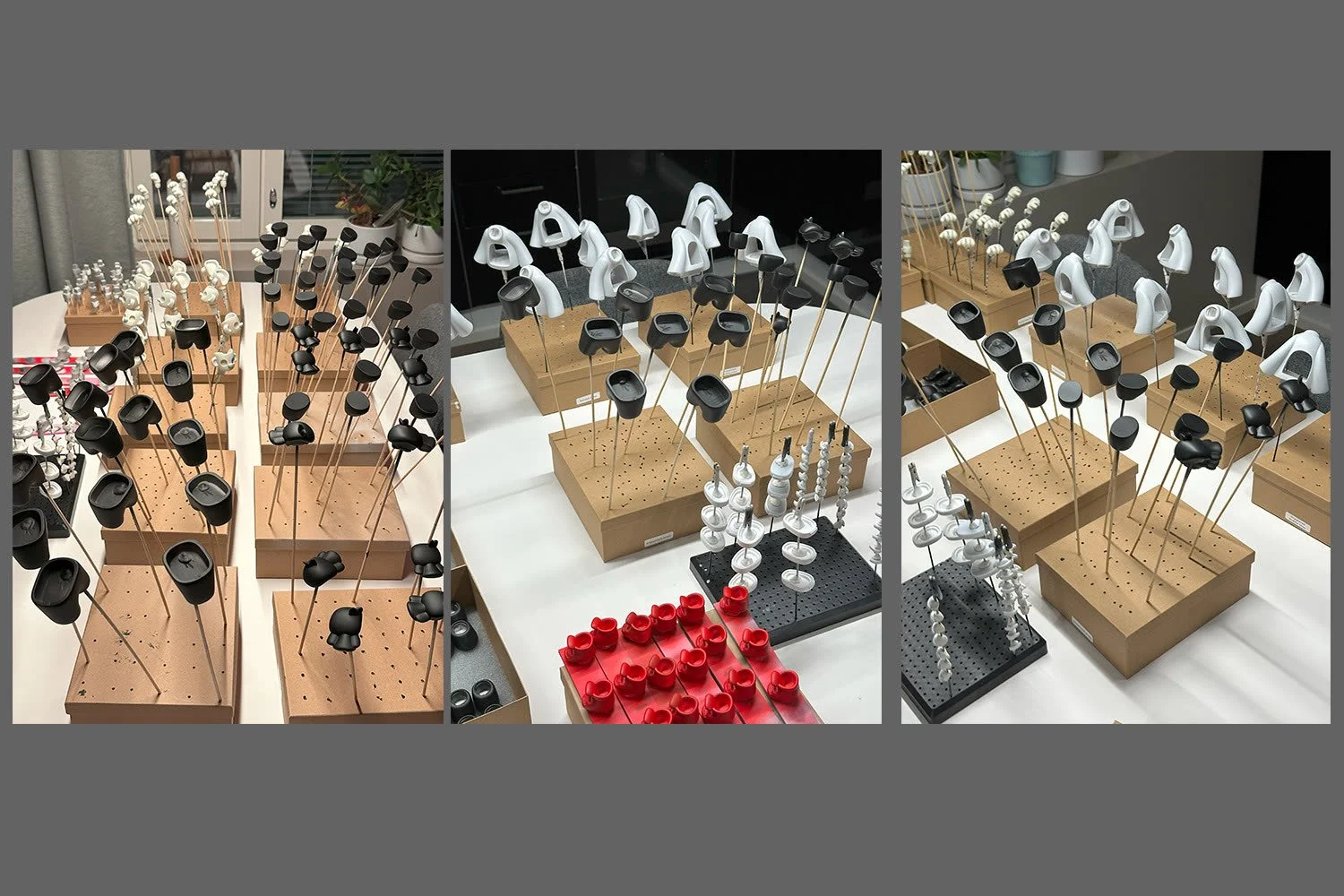
9. Painting by hand
Painting is where the sculpt becomes a character. Each figure is painted and airbrushed in thin layers, with each layer left to dry before the next. Edges are masked by hand. We keep a paint recipe for every colourway so every piece in an edition matches.
A final coat of satin varnish protects the paint, and it's left to cure fully before anything is packed.
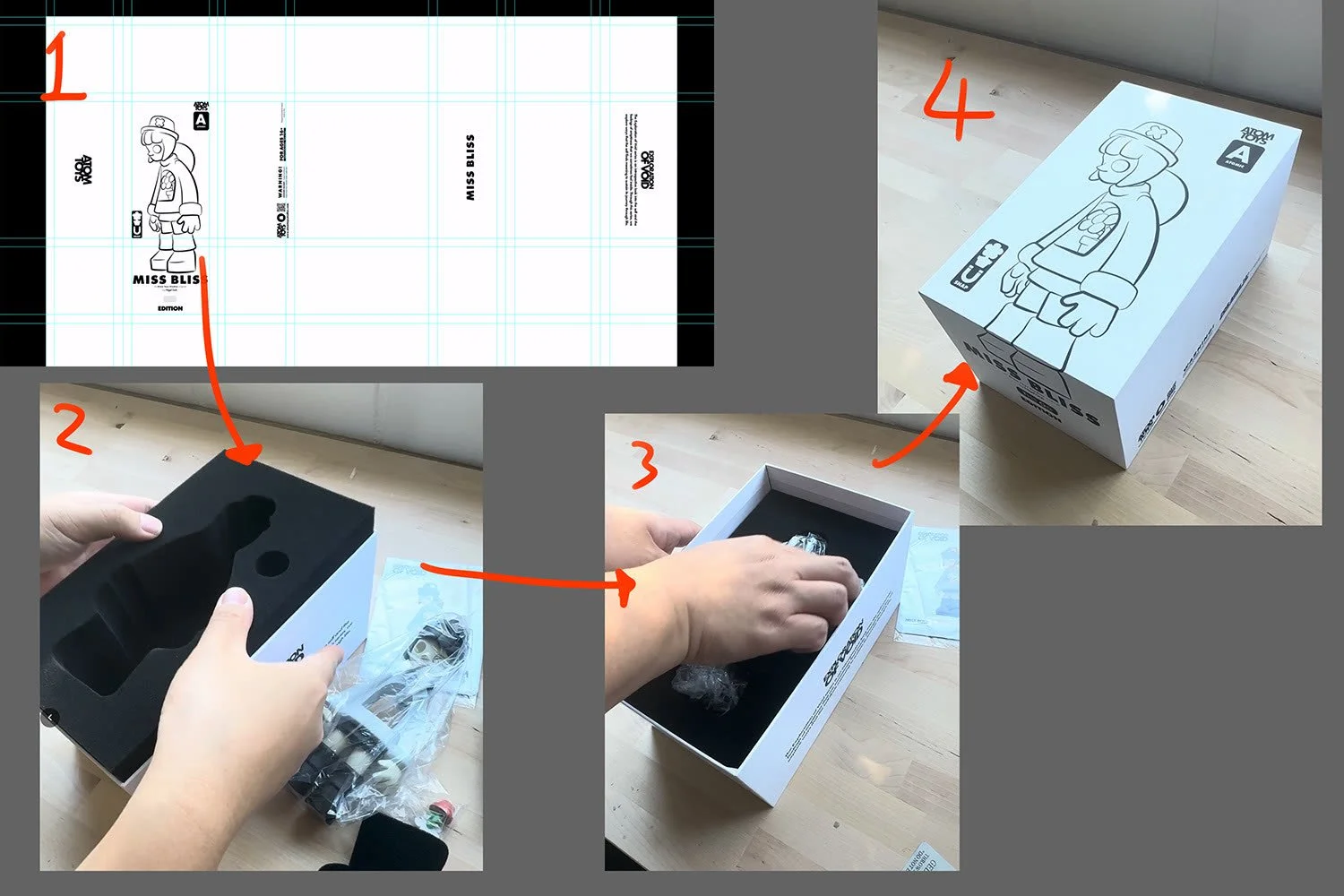
10. Assembly, packaging and certificate
The parts are fitted, glued and checked one last time. Then each figure is packed with its numbered certificate, which records the edition size, the piece number and the artist's signature.
That certificate is how you know exactly which piece you own, and that it was made by the studio that designed it.
How long does it take to make an art toy?
From idea to finished edition, months. From casting to finished figure, about 30 days per batch. Most of that time is design, testing and curing. The hands-on work of sanding and painting a batch of 30 takes around 60 hours on its own.
FAQ
How are art toys made?
Most resin art toys are sculpted (often digitally), printed as a master, moulded in silicone, cast in resin, sanded, primed, hand-painted and varnished. Each step is done by hand in small editions.
What are art toys made of?
Art toys are usually made of resin or vinyl. Atom Toys figures are cast in resin, which captures fine detail and suits small, hand-finished editions.
How long does it take to make an art toy?
Designing a new character can take months. Once the moulds are ready, one batch takes about 10 days from casting to finished figure, including curing time.
Are art toys made by hand?
Handmade art toys are. At Atom Toys Studios, every figure is cast, sanded, primed, painted and packed by hand in our studio in Espoo, Finland.
What is a master in toy making?
The master is the original, perfected version of the figure. Silicone moulds are made from it, and every figure in the edition is cast from those moulds.
Why does each piece look slightly different?
Because each one is finished by hand. Small differences in sanding and painting are part of what makes a handmade piece unique.
Every figure on your shelf has been through all ten steps, by hand. See the result up close in the shop, or start with What Is an Art Toy? if you're new to all this.
Get new editions before they go public. Join the Atom Toys list for first access to new pieces, studio notes and one email a month.
