
Non-Essential Art Toy Exhibition
What is an Art Toy: A Beginner’s Guide to Designer Art Toys
Art. Toys. Fun. Play.
Are they non-essential? Perhaps. But human? Undoubtedly.
You may have already seen an art toy without knowing what it was.
Perhaps it was a strange character displayed in a gallery, a hand-painted figure shared by an artist online, or a small sculpture that looked playful but carried a deeper story.
Art toys sit in the space between art, design, storytelling and collecting. They can resemble familiar toys, but they are usually created as works of art rather than objects made primarily for play.
Some are joyful. Some are unsettling. Some tell personal stories about loneliness, identity, consumer culture, childhood or the small comforts that help us through everyday life.
But what exactly makes something an art toy?

Art Toy is an art movement where the figures are loved like toys and collected like artworks.
What is an art toy?
An art toy is a character, figure or sculptural object created by an artist or independent studio.
Unlike most mass-produced toys, the artist’s personal vision is at the centre of the work. The character, shape, materials, colours and story are all part of the artist’s creative language.
At Atom Toys, we believe that art toys have 3 characteristics:
1) they are limited edition collectibles.
2) they have childhood elements with an adult twist.
3) they are loved like toys and collected like artworks.
The term designer toy is also commonly used. Art toy and designer toy often describe the same creative field, although different artists and collectors may use the terms in slightly different ways.
In Finnish, an art toy may be described as a taidelelu, but the international terms “art toy” and “designer toy” are still widely used within the community.
Is an art toy a toy or a sculpture?
It can be both.
Art toys borrow the visual language of toys: characters, bright colours, movable parts, accessories and familiar forms. At the same time, artists use these forms to explore ideas in the same way that they might use painting, illustration or sculpture.
An art toy might look cute at first but tell a story about grief. A colourful character might explore loneliness or escapism. A humorous figure might question consumer culture, social behaviour or our relationship with technology.
This contrast is part of what makes the medium interesting.
The playful form can make an artwork feel approachable, while the idea underneath it can be personal, emotional or critical.
Art toys do not need to fit neatly into one category. They can exist between fine art and popular culture, between something familiar and something completely new.
What is the difference between an art toy and an ordinary toy?
An ordinary toy is usually designed primarily for play and produced for a broad consumer market. An art toy is generally created as an expression of an artist’s ideas, characters and visual identity.
The difference is not simply price, rarity or packaging. It is the intention behind the object.
Many independent artists produce their pieces in very small batches. A figure may be cast, sanded, painted and assembled by hand in the artist’s own studio.
Small differences between pieces can become part of the artwork rather than imperfections to be hidden.
How are art toys made?
There is no single way to make an art toy. Every artist develops a process that suits their materials, skills and ideas.
At Atom Toys Studios, the process usually begins with a feeling or question.
What are we trying to express? Who is this character? What is missing from their world? What are they holding onto?
The idea gradually becomes a sketch, a digital sculpture and then a physical object.
Why do artists create art toys?
A character can act as a reflection of the artist, the collector or society. It can represent a feeling that is difficult to explain directly.
At Atom Toys, our characters are built around the idea of the void, the emptiness we carry and the small joys we use to fill it.
These small joys might be food, games, music, nature, objects or memories. They comfort us, distract us and sometimes help us keep going.
The visible void inside each character transforms an invisible feeling into something physical. The object placed inside it, which we call Copium, represents the comfort the character is holding onto.
This is what draws us to art toys as a medium. A sculpture can be playful and emotionally heavy at the same time. It can make someone smile before inviting them to look more closely.
Why do people collect art toys?
People collect art toys for many different reasons.
Some connect with a particular character or story. Others appreciate the sculpture, craftsmanship, colour or design. Some want to support independent artists and own something made in a small studio rather than a factory producing thousands of identical objects.
Collectors may also follow an artist’s work over many years, watching characters develop and change from one edition to another.
You do not need a large collection to appreciate art toys. You also do not need to understand every reference, know the terminology or follow the biggest international brands.
Sometimes one object is enough.
The most meaningful piece is often the one that makes you feel something.
Are all art toys expensive?
No.
Art toys can range from accessible miniature figures and artist-made objects to large sculptures and extremely limited editions.
The price depends on many factors, including:
The size of the edition
The materials used
The size and complexity of the sculpture
Whether it is handmade or factory-produced
The amount of painting and finishing involved
The artist’s experience and existing body of work
A hand-cast resin figure made in an edition of 20 requires a very different production process from a figure manufactured in the thousands.
Price alone does not determine whether something is meaningful or artistically valuable. Small magnets, prints, zines and miniature figures can also provide an accessible way to discover and support an artist.
What is a blind box art toy?
A blind box contains one character or design from a larger series, but the exact version remains hidden until the package is opened.
Some series include several standard characters and one rare or secret design.
Blind boxes introduce surprise and play into collecting. They can also encourage people to trade figures with other collectors.
However, not every art toy is a blind box. Many artists sell clearly identified sculptures, limited editions or one-of-a-kind pieces.
Where can you discover art toys in Finland?
Art toys have developed passionate communities across Asia, North America and parts of Europe, but the medium is still relatively unfamiliar to many people in Finland.
We want to change that.
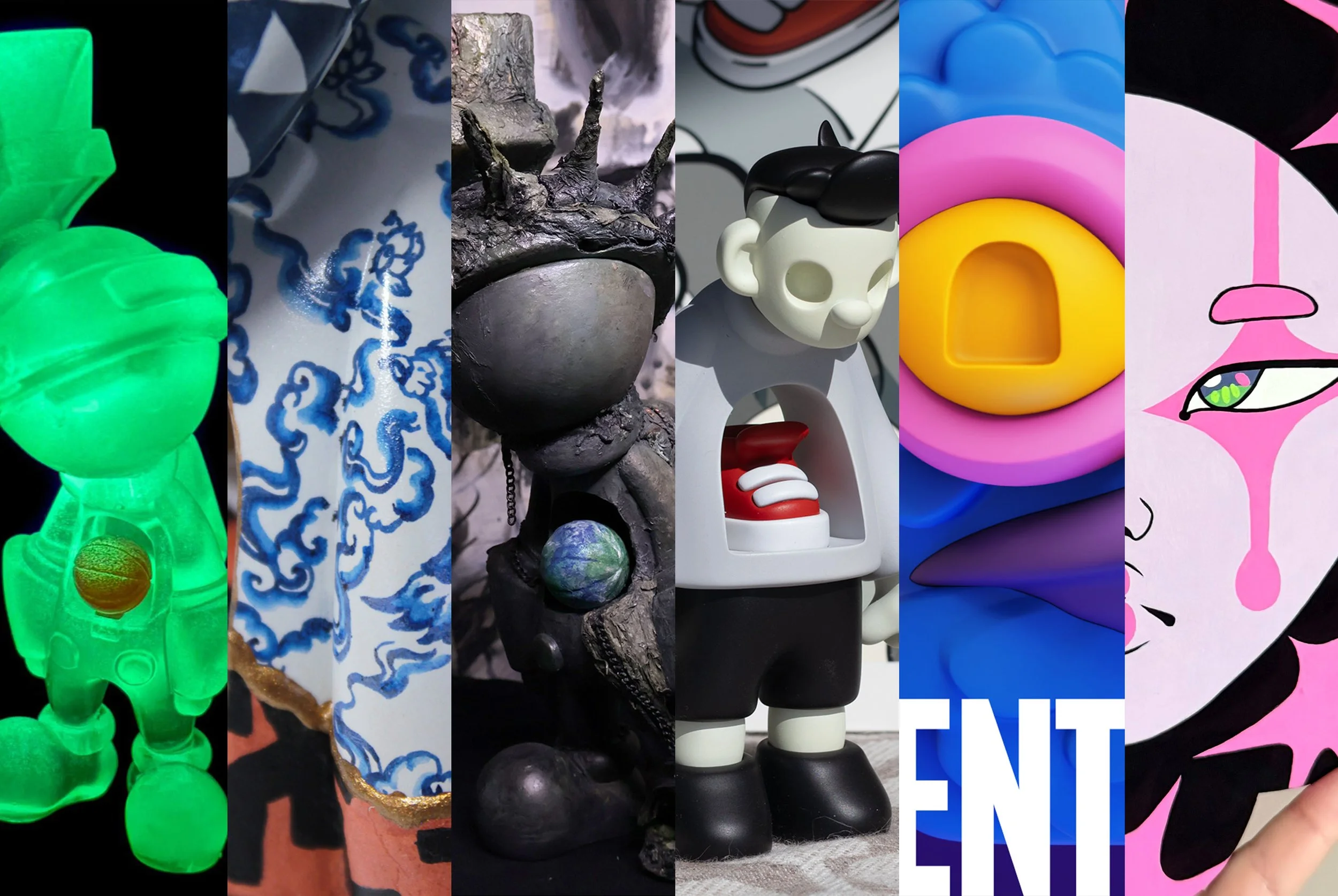
Discover the art toy community in Finland.
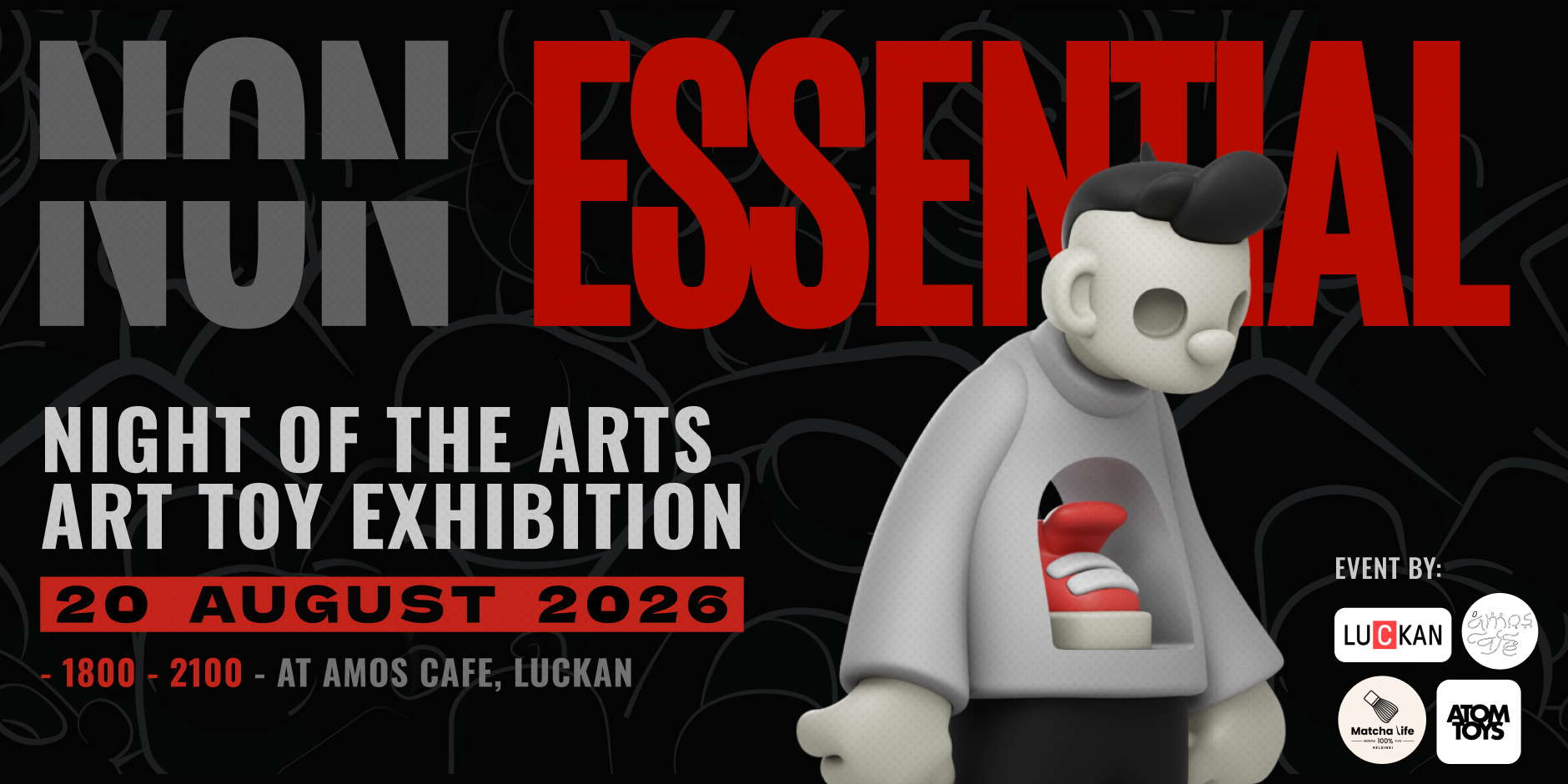
On Thursday, 20 August 2026, Atom Toys Studios will host NON-ESSENTIAL: An Art Toy Exhibition at Luckan Helsingfors during Helsinki’s Night of the Arts, or Taiteiden yö.
The exhibition brings together ten artists working across art toys, sculpture, painting, sound, ceramics, street art and character design.
Visitors will be able to experience finished artworks alongside the stories, materials and creative processes behind them.
The evening will also include:
A free exhibition zine
Live screen printing
An interactive “Hold On to Your Joy” mirror installation
Music by DJ Jope
Desserts and refreshments while supplies last
Opportunities to meet artists and discover how their work is made
You do not need to be an experienced collector. You do not need to know what vinyl, resin, sofubi or blind boxes mean.
You only need to be curious.
Visit NON-ESSENTIAL in Helsinki
NON-ESSENTIAL: An Art Toy Exhibition
Date: Thursday, 20 August 2026
Time: 18:00–21:00
Venue: Luckan Helsingfors
Address: Yrjönkatu 27, Helsinki
Admission: Free
Part of: Helsinki Night of the Arts 2026
Art toys may be called non-essential objects, but art, play, storytelling and human connection are anything but unnecessary.
Come and discover the world of art toys with us.
Best regards,
Atom Toys Studios
